About the Boiling Frog Syndrome (Featuring Poor Charlie’s Almanack)

“Without numerical fluency, in the part of life most of us inhibit, you are like a one-legged man in an ass kicking contest.”- Charlie Munger
Arise, bookworms, entrepreneurs, and ambitious menaces- we’ve got a good one today (don’t worry we’ll get back to that quote).

I’ve spent hundreds of hours religiously listening to The Tim Ferriss podcast and I am on a mission to give to you the key insights from the books mentioned frequently such as Poor Charlie’s Almanack, Zero to One, The Four-Hour Work Week, and so forth (but to save you the pain that would be reading through a ten-thousand word long article, let’s focus on the first one for now).
Big daddy of science Isaac Newton once said “If I have seen further, it is by standing on the shoulders of giants”, and what a blessing it is for us to be able to look inside the mind of the most successful people across virtually every field through these books and podcasts.
Poor Charlie’s Almanack
Firstly, what the heck is an almanack?
In this context, it refers to a collection of wisdom, advice, and reflections similar to how a traditional almanack (a yearly publication) would contain useful info like a calendar, weather forecasts, etc.
It’s mainly a collection of talks and essays from Charlie Munger, Warren Buffet’s long-time business partner and former vice chairman of Berkshire Hathaway.
If there were two things I could take away from this book it would be the importance of mental models and synthesis- and this my dear smetzels will be what we are going to analyze in painstakingly excruciating detail today.
Woah, big words I know, but hang on for a second.
Mental Models
At one point in history, humans were but an insignificant part of a larger ecosystem (sorry if that triggered anyone’s ego).
We were both predators and prey. As part of our evolution, we learned to make rapid decisions to avoid getting killed by a saber-toothed cat ready to turn us into human patties or another one of the other gazillion ways we puny humans could die. Thus to survive, we relied heavily on our intuition.
However, for better or worse, humans have evolved and quickly conquered the world. As we ascended the food chain, we no longer have to live in constant fear- at least of cave lions or other predators ready to pounce on us introducing us to our mortal ends.
We are now in quite an intellect-based society I would argue- smart people often quickly furthering their careers, and knowledge gaps between social classes putting the wealthier at an advantage.
We now have to think and think clearly.

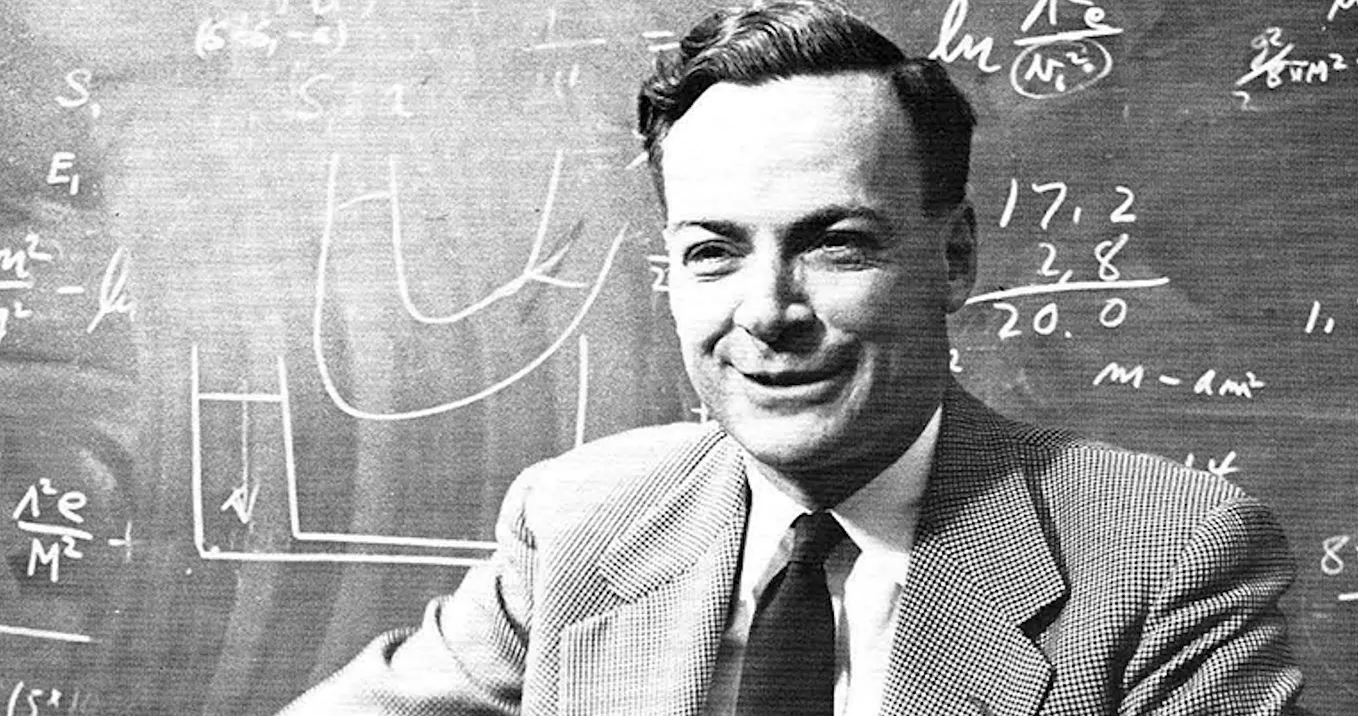
Mental models such as loss aversion, doubt aversion, reciprocity, and more are extremely helpful in strengthening your decision-making by protecting you against your own cognitive biases as you, yes you, “You must not fool yourself and you are the easiest person to fool.” (Richard P. Feynman).
One I found particularly fascinating was the contrast-misreaction tendency which goes particularly well with a side of boiling frog syndrome (Yes, I am so serious right now).
A plate of contrast-misreaction tendency (CMT)+ a savory side of boiling frog syndrome (BFS)
Delicious.
CMT is the tendency for humans to not evaluate a thing based on its objective worth but rather relatively through comparison.
This article notes a fascinating story of a shop owner with a hearing disability. Bob walks into the store and tries on a suit. The shop owner’s less experienced younger brother sits at the back.
“How much is the suit?”, asks Bob.
The shop owner asks his younger brother who is looking at the price catalog of the store, “9000 dollars”, the brother replies.
“That will be 5000 dollars,” the shop owner says to Bob.
Realizing that this might be his opportunity to get this dream suit at nearly half the price, he quickly pays and leaves the store. We should envy Bob for this lucky break…right? Well, no.
Turns out the owner never had a hearing disability and knows that similar suits sold for only around 3000 dollars outside. Bob, basing his decision on the relative difference rather than the coat’s objective value therefore thought that he was able to bag a steal, instead he simply played into the master plan of the shop owner.
What a menace.
But this evil known as CMT pervades nearly every aspect of our lives.
Investors throw their money into the stock market after a stock falls 50% thinking that the stock is cheap when its true value might be calculated at even half of that. People settle for unsatisfactory partners just because they are so much better compared to their abusive parents. Home buyers falls into the trap of a real estate agent who, before showing them the house intended for them to buy, takes them into a bad neighborhood.
Recognizing the role that this bias plays in our decision-making will make us more effective in our thinking and protect us from making irrational decisions.
And how does the frog relate to all of this?

A frog, if put into extremely hot water, will immediately jump out to protect itself due to the extreme contrast in the surrounding temperature. However, a frog that is put into water where the temperature is slowly rising in increments will not recognize this change and boil to death.
Once we start taking these incremental steps deeper and deeper into our bad habits, by the time we realize what has happened, it will be most likely too late.
Get smetzel’s stories in your inbox
Join Medium for free to get updates from this writer.
This applies to alcoholism, procrastination, excessive spending, and so much more. Just think about it, when was the last time you made an excuse to do something the ideal version of yourself would not do and justified by saying that it “wasn’t that bad”?
Although that may be true, many people don’t stop there and thus dig the holes to their own graves little by little.
Synthesis
“A jack of all trades, master of none.”
Wait. Stop right there. Try again.
“A jack of all trades, master of none, but often better than a master of one.”
There we go.
Many people use the first part of this quote to emphasize the importance of specialization in a single field when it seems that knowledge in various fields and the resulting synthesis would actually be more beneficial to you as illustrated in the full quotation.
There was a cool bit in the book where Charlie takes us through his thought process for building a company from $2 million to $2 trillion using Coca-Cola to demonstrate.
Put on your seatbelts ladies and gentlemen, we’re in for a ride.
This single example will demonstrate how a multidisciplinary approach along with the application of fields like psychology in real-world scenarios can be extremely helpful (plus explain what I meant with the quote which started off this chaotic ride).
A rich man named Glotz decided to go into the non-alcoholic beverages business and put up 2 million dollars, only taking half of the stakes. The other half will go to the man who can give him the best plan on how to turn this corporation into one worth $2 trillion in 150 years.
Charlie Munger proposes this absolute chart-topping banger in response (this is a summarized version of his lecture “Practical Thought on Practical Thought”).
Firstly, Coca-Cola must be turned into a ‘strong, legally protected trademark’. The exotic and unique Coca-Cola is used to be reminiscent of expensive drinks and the packaging and look of the product itself will also have to comply with this association (if the drink comes out clear then we must color and carbonate it to look like wine or champagne).
Using quick maths, Charlie calculates that by 2034 there will be about 8 billion beverage consumers in the world, where on average they will consume 64 ounces of water per day (eight 8-ounce servings). Therefore if Coca-Cola with its copycats can capture 25% of the market with Coca-Cola dominating half of this market, it can sell 2.92 trillion 8-ounce servings in 2034. Then if they can pocket 4 cents per serving then they will earn $117 billion. If the business is growing at a good rate this will easily be worth $2 trillion (did I lose you yet? Don’t worry, just keep going.)
This stresses the importance of numerical fluency in thinking- you don’t need to be an engineer-level math wiz, but you do have to be able to quickly make basic calculations.
To do this, “we are going into the business of creating and maintaining conditioned reflexes.”
Any one of you who took high school psychology will probably be familiar with operant and classical conditioning (Pavlov’s Dogs), but you probably have never heard it be applied to business.
These two conditioning techniques when applied will create a lollapooza effect in which multiple cognitive biases combine to create a strong effect.
For operant conditioning, we must 1) maximize the rewards of drinking our beverages and 2) Reduce the possibilities that competitors can compete with us.
To maximize the rewards, we can look at the following:
- Food value in calories or other inputs (immediate reward due to energy boost)
- Flavor, texture, and aroma acting as stimuli to consumption under the neural preprogramming of man through Darwinian natural selection (pleasurable sensations triggered)
- Stimulus, by sugar or caffeine (release of dopamine or other pleasure chemicals+ stimulates alertness or euphoria)
- The cooling effect when one is too hot (“there is much less opportunity, without ingesting a beverage, to counteract excessive heat compared with excessive cold. Moreover, with excessive heat, much liquid must be consumed, and the reverse is not true.”)

Furthermore, by investing in making the product as widely available as possible throughout the world a priority, “A competing product, if it is never tried, can’t act as a reward creating a conflicting habit. Every spouse knows that”.
I mean, he’s not lying.
Through marketing, we must associate the pleasure and brand of drinking Coca-Cola with the pretty women and the good-looking guys who drink it in commercials.
This will create a viral effect which creates social proof that it becomes cool to drink Coca-Cola.
All of this will combine into an “autocatalytic reaction” and trigger a lollapalooza effect as intended.
Thinking in reverse, we must also avoid the stop-consumption effects of aftertaste that are a standard part of physiology, through chemistry, we must prevent this to allow consumption after consumption of our beverages.
Second, we must avoid ever losing even half of our trade name as that would make us responsible for the quality of other brands to prevent the association of Coca-Cola to low quality.
We must also avoid making any huge changes to the flavor, as even if it performs better in blind taste tests, the combined psychological effects that we have carefully crafted over the years will be so entrenched in the old taste and thus the consumer preference that changing would be a foolish thing to do (just think about New Coke lol).
There is more to this than summarized here, you can click this link to read the full text.
If you have made it this far then congratulations, you’re an absolute G and Charlie would have been proud of you. I won’t bother you anymore but here’s a quote I’ll leave you with-
“I constantly see people rise in life who are not the smartest, sometimes not even the most diligent, but they are learning machines. They go to bed every night a little wiser than they were when they got up and boy does that help, particularly when you have a long run ahead of you.” — Charlie Munger
Lots of love,
smetzel